

Quick Answer
Wetlands help slow precipitation runoff, retain floodwater, absorb excess nutrients, sequester carbon, reduce erosion, and provide essential habitat for species threatened by climate change.
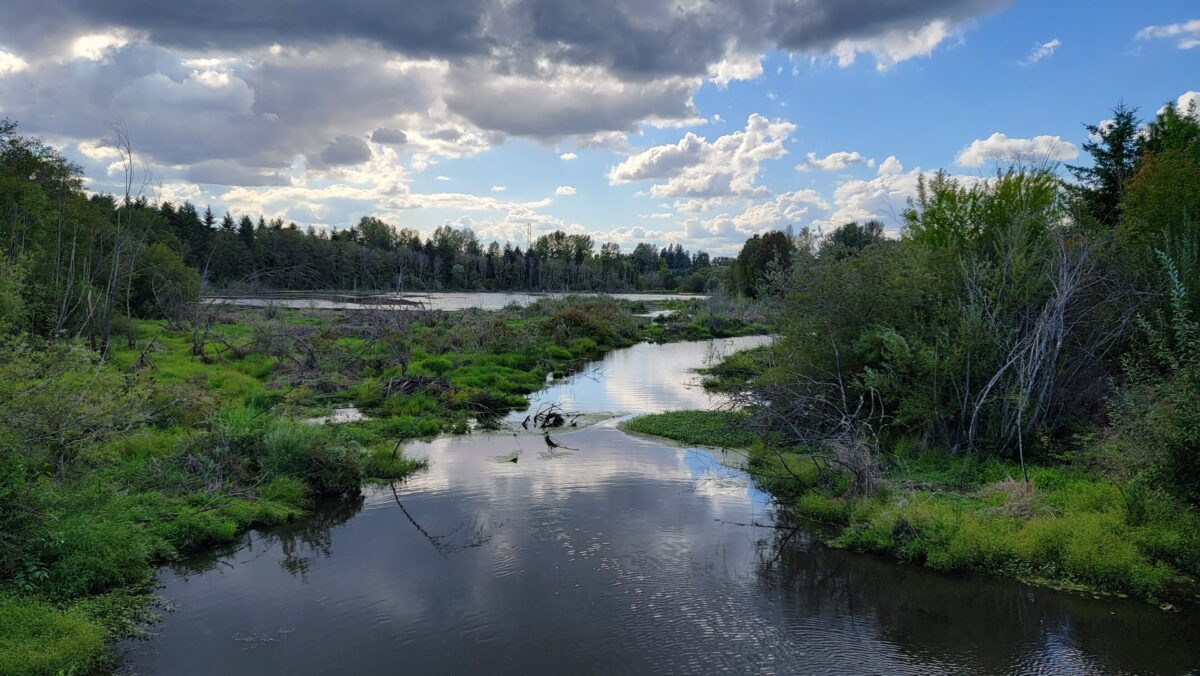
Image above: Beaverton Creek Wetlands in Beaverton, OR. (CC BY-SA 4.0) via Wikimedia Commons
Climate change is causing an increase in the frequency and intensity of extreme weather events, such as heavier storms and more damaging floods. As major regulatory systems in the Earth’s watersheds, wetlands can help humans and the environment withstand these events. Wetlands act like sponges in the environment, soaking up excess storm runoff and allowing nutrients and pollutants to settle into the soil. One acre of wetland can typically store about 1 million gallons of water. Water is then released more slowly into streams and lakes, reducing the risk of flooding. By allowing nutrients to settle in wetlands, smaller amounts of nitrogen and phosphorus are deposited in lakes and ponds, limiting the amount available to fuel harmful algal blooms.
Just like other plants, wetland vegetation sequesters carbon through the process of photosynthesis, capturing carbon dioxide that would otherwise remain in the atmosphere. Wetland plants growing along the edges of streams help hold the banks steady, limiting erosion and sediments deposited downstream.
Wetlands are also highly biodiverse, meaning they are home to many different species of amphibians, birds, fish, mammals, reptiles, and plants. Many of these species are adapted to the unique wetland conditions, like anaerobic soils and changing flood levels, and may not be found in any other ecosystems in the world. About one-third of all endangered and threatened species in the United States rely on wetlands for nesting, feeding, and breeding grounds. Protecting and restoring wetlands maintains these essential habitats for the organisms they support, and helps the entire landscape withstand the impacts of climate change.
Sources:
Cayuga Lake Watershed Network. (n.d.). Wetlands Maps Updated for Tompkins County. https://www.cayugalake.org/the-watershed/wetlands-maps-updated/
Hudson River Estuary Program. (n.d.). Wetland Conservation: What does the Hudson Valley have to lose? [Fact sheet]. New York State Department of Environmental Conservation. https://extapps.dec.ny.gov/docs/remediation_hudson_pdf/wetlandsfs.pdf
National Parks Service. (2025, May). Why are Wetlands Important? United States Department of the Interior. https://www.nps.gov/subjects/wetlands/why.htm
United States Environmental Protection Agency. (2026, April). Basic Information about Wetland Restoration and Protection. https://www.epa.gov/wetlands/basic-information-about-wetland-restoration-and-protection